
Almost every man who’s tried to grow a beard has faced the same frustrating mirror moment: strong growth on the chin, a decent mustache, and then… gaps. Thin spots on the cheeks. A neck that grows faster than everything else. Patchiness is one of the most common beard struggles there is and one of the most misunderstood.
The truth about how to fix a patchy beard is a mix of honesty and good news. Some patchiness is genetic and won’t fully disappear, but almost every patchy beard can be made to look significantly fuller with the right growth strategy, grooming, shaping, and styling. This guide walks you through why patchiness happens, what you can realistically change, and how to make the most of the beard you’ve got.
If you’re in Bangkok and want expert help shaping a patchy beard into something sharp, the barbers at Z CUTZ shape beards every day across our three locations but first, let’s understand what you’re working with.
Why Do You Have a Patchy Beard?
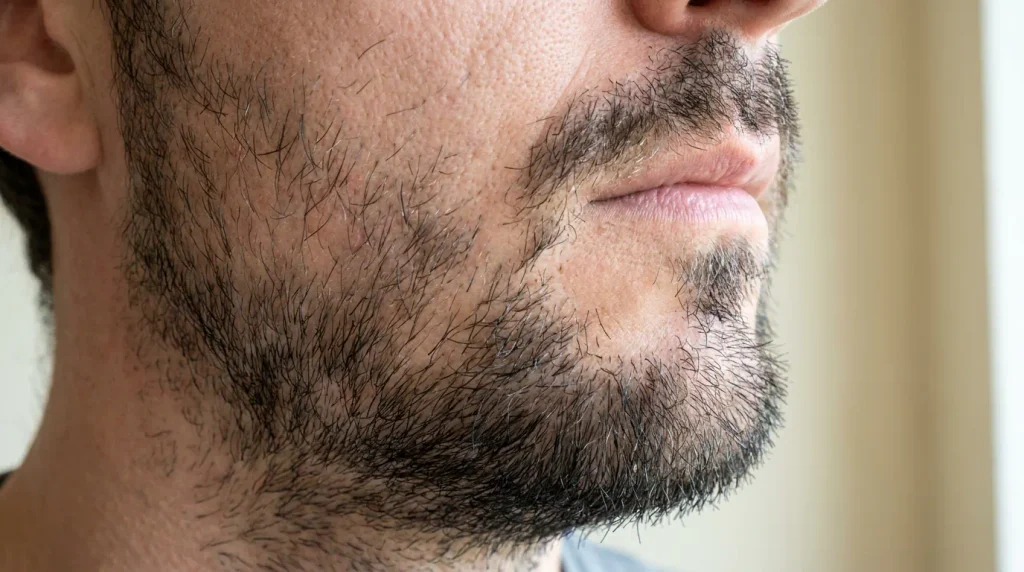
Before you can fix a patchy beard, it helps to understand what’s causing it. Patchiness isn’t a single problem with a single fix it’s the result of several factors, some in your control and some not.
Genetics and Patchy Beard Growth
Genetics are the single biggest factor in how your beard grows. Your DNA determines how many hair follicles you have on your face, where they sit, how dense they are, and how sensitive they are to the hormones that drive beard growth.
This is why two men with the same lifestyle can have completely different beards. If your father or grandfather had thick, even beards, you’re more likely to as well and if the men in your family had patchy growth, you may share that pattern. It’s not a reflection of your health, your masculinity, or anything you’ve done wrong. It’s simply the hand you were dealt.
The important takeaway: genetics set your maximum potential, but very few men actually reach it, because growth, care, and grooming aren’t optimized. That gap is where real improvement lives.
Age and Beard Growth Patterns
Beard growth changes dramatically with age. Many men in their late teens and early twenties have patchy, uneven growth simply because their beard hasn’t finished developing. Facial hair often continues to fill in through the twenties and into the early thirties.
If you’re young and frustrated by gaps, the single most powerful thing you can do is wait. The beard you have at 21 is rarely the beard you’ll have at 28. Patience isn’t the most exciting advice, but for younger men it’s often the most effective.
Other Factors That Affect Patchy Beards
Beyond genetics and age, several other factors influence how full your beard looks:
- Hormones : Testosterone and DHT drive beard growth. Levels vary naturally between men.
- Nutrition : A diet lacking key vitamins and protein can limit healthy hair growth.
- Stress : Chronic stress can disrupt hair growth cycles and worsen shedding.
- Sleep : Poor sleep affects hormone balance and recovery, both tied to hair health.
- Skin health : Clogged, dry, or irritated skin creates a poor environment for follicles.
- Blood flow : Good circulation delivers nutrients to the follicles that feed hair.
The encouraging part: most of these are things you can actually improve.
How to Fix a Patchy Beard Naturally
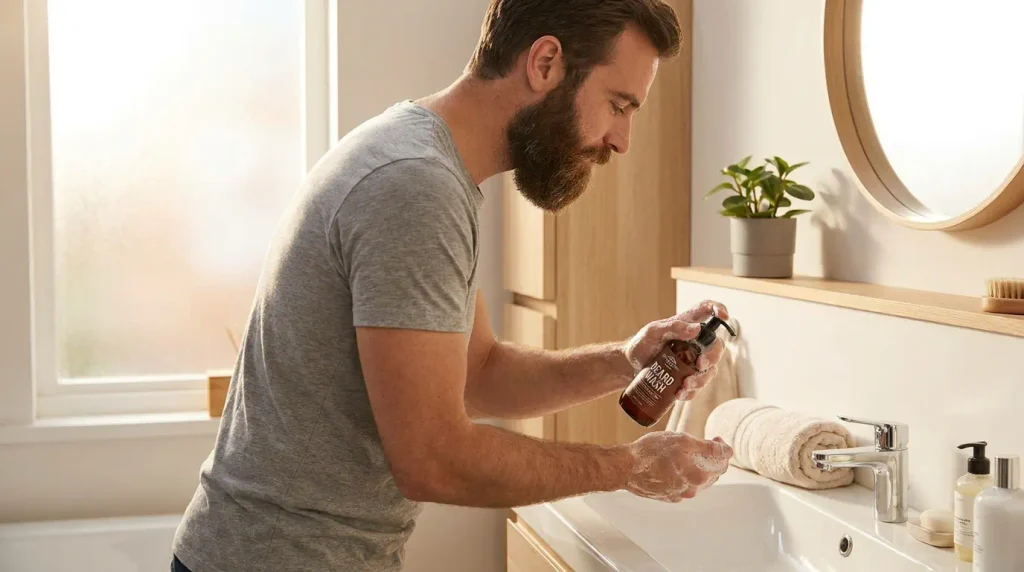
You don’t need gimmicks to improve a patchy beard. The natural approach patience, skin care, nutrition, and grooming delivers the most reliable results for most men.
Give Your Beard Time to Grow
The most common reason beards look patchy is that they’re cut off too early. Short hairs expose the gaps between follicles. As hairs grow longer, they begin to lie over thinner areas and cover them.
Commit to a minimum of four to six weeks of uninterrupted growth before judging your beard. Resist the urge to trim, shape, or “clean up” during this phase. It will look messy and uneven in the middle of week two that’s normal. Push through it. Many men who think they can’t grow a beard simply never gave it enough time.
Take Care of Your Skin
Healthy beard hair starts with healthy skin. The follicles that grow your beard sit in your skin, so a clean, hydrated, well-circulated face creates better conditions for growth.
- Cleanse daily to remove dirt and excess oil that can clog follicles.
- Exfoliate a couple of times a week to clear dead skin and encourage healthy follicles.
- Moisturize to prevent dryness and flaking under the beard.
- Massage the area to stimulate blood flow to the follicles.
Eat for Healthy Beard Growth

Your beard is built from what you eat. A nutrient-poor diet can hold back growth even when your genetics are willing. Focus on:
- Protein : The building block of hair. Eggs, lean meat, fish, and legumes.
- Vitamin A, C, and E : Support healthy skin and hair from fruits and vegetables.
- Biotin (B7) and B vitamins : Linked to hair health; found in eggs, nuts, and whole grains.
- Zinc and iron : Deficiencies are associated with hair thinning.
- Healthy fats : Support hormone production, from nuts, seeds, and olive oil.
You don’t need supplements if your diet is balanced real food is more effective and better absorbed.
Improve Your Grooming Routine
A consistent routine keeps your beard healthy as it grows. Wash it a few times a week with a gentle beard wash (not harsh regular shampoo), condition it to keep it soft, and brush it regularly to train the hairs and distribute natural oils. Good habits won’t create new follicles, but they’ll help every hair you do have look its healthiest.
How to Make a Patchy Beard Look Fuller
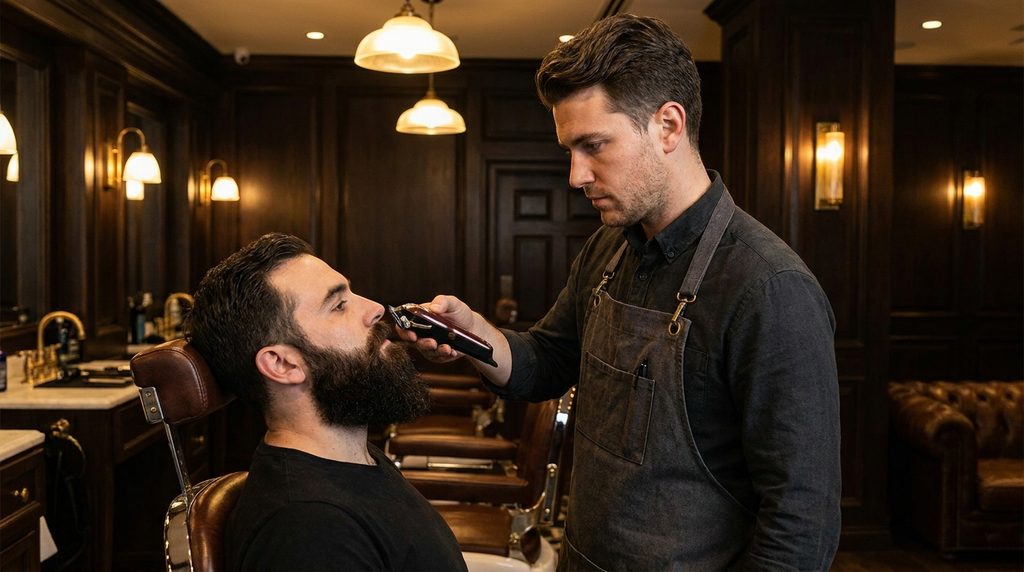
Sometimes fixing a patchy beard isn’t about growing more hair it’s about styling the hair you have to look as full as possible. This is where the right choices make a dramatic difference, and where a skilled barber earns their keep.
Choose the Right Beard Length
Length is everything with a patchy beard. Too short, and the gaps show. Too long, and thin areas can look stringy and wispy. There’s usually a sweet spot often a medium-short length where longer hairs from denser areas fall across and cover the thinner patches. Experiment to find where your beard looks fullest, and let your barber help you identify it.
Shape Your Beard for Better Coverage
Shaping is one of the most powerful tools for disguising patchiness. By defining clean cheek and neck lines and trimming stronger areas to blend with weaker ones, a barber can create the illusion of an even, intentional beard. A well-shaped patchy beard almost always looks better than an unshaped full one. This is exactly the kind of detail work that separates a good barber from a great one.
Use Beard Oil and Lightweight Products
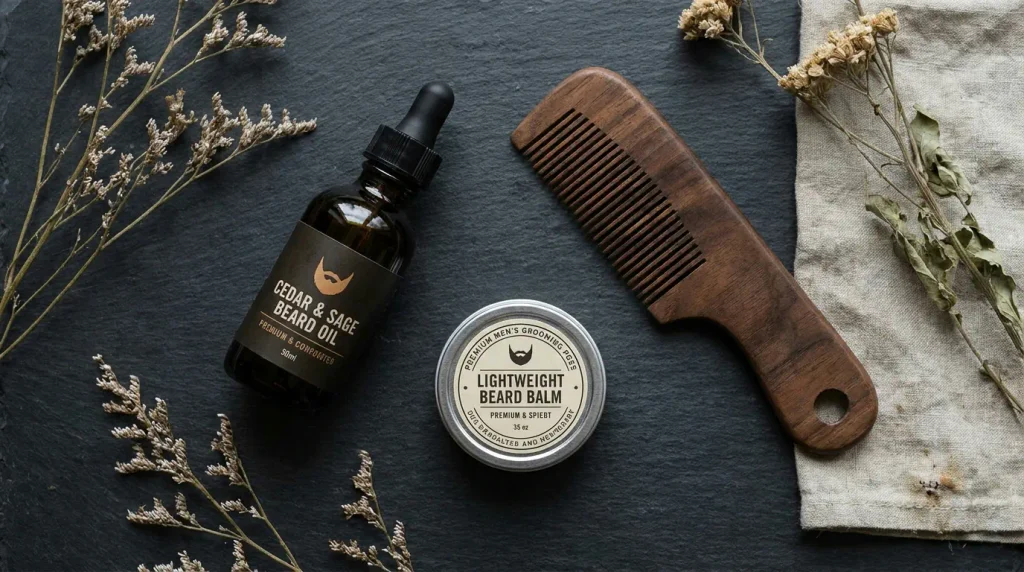
Beard oil won’t grow new hair, but it keeps your beard soft, healthy, and well-conditioned, which helps hairs lie flatter and cover more. Lightweight products also add a subtle sheen that makes the beard look healthier and denser. Avoid heavy waxes and balms that can clump hairs together and actually expose gaps.
Brush and Style Your Patchy Beard
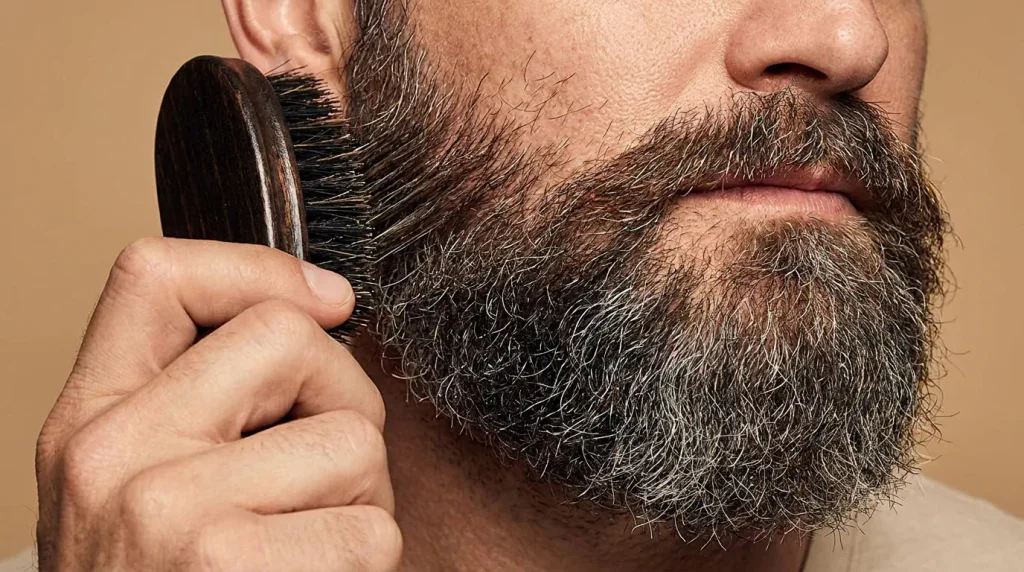
Brushing is a patchy-beard secret weapon. Brushing hairs across the face rather than letting them grow straight down helps longer hairs from full areas drape over thinner ones. A boar-bristle brush trains growth direction over time and instantly improves coverage. Blow-drying while brushing can add volume and further disguise gaps.
Best Beard Styles for a Patchy Beard
The right style works with your growth pattern instead of against it. If your cheeks are thin but your chin and mustache are strong, choose a style that emphasizes those areas.
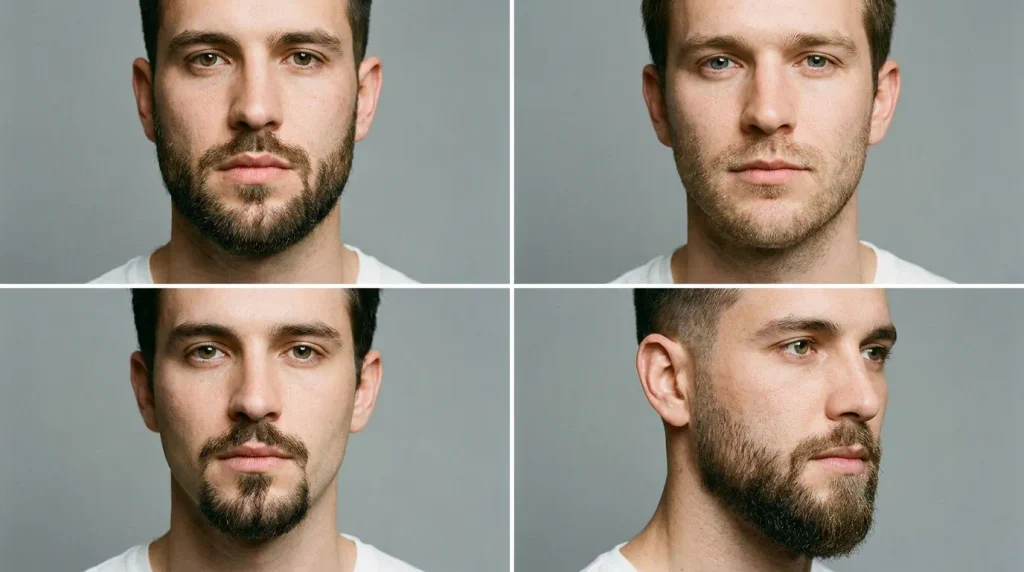
Short Beard Styles for a Patchy Beard
Short, neat beards are the most reliable choice for patchy growth. Kept tidy and well-defined, a short beard minimizes the visibility of gaps and looks sharp and intentional. A corporate beard or short boxed beard, cleanly lined up, flatters most patchy patterns.
Stubble Styles for a Patchy Beard
Stubble is arguably the best-kept secret for patchy beards. At short stubble length, the density difference between thick and thin areas nearly disappears, creating a uniform shadow across the whole face. It’s low-maintenance, universally flattering, and requires almost no growth commitment.
Goatee Styles for a Patchy Beard
If your cheeks are the problem but your chin and mustache grow well, lean into it. A goatee or circle beard concentrates the beard where you have the most growth and removes the patchy cheek areas entirely. Done well, it looks deliberate and stylish rather than like you’re hiding anything.
Faded Beard Styles for a Patchy Beard
A beard fade where the beard tapers gradually into the sideburns and neckline creates a smooth, blended look that draws the eye away from patchy spots. Pairing a faded beard with a fresh fade haircut ties the whole look together, and it’s one of the most requested combinations at Z CUTZ.
Beard Growth Products: What Actually Works?
The beard-growth industry is full of bold promises. Here’s an honest look at what these products can and can’t do.
Does Beard Oil Fix a Patchy Beard?
Beard oil does not grow new hair or create new follicles no topical oil can do that. What it does do is condition your beard and the skin beneath it, reduce itch and flaking, and keep hairs soft and manageable so they lie better and cover more. So while beard oil won’t “fix” patchiness at the follicle level, it genuinely helps a patchy beard look and feel its best. It’s worth using just for the right reasons.
Can Vitamins Help a Patchy Beard?
Vitamins help only if you’re deficient. If your patchiness is caused by poor nutrition, correcting a vitamin or mineral shortfall can improve growth. But if you already eat a balanced diet, taking extra vitamins won’t push growth beyond your genetic potential. Address your diet first; supplements are a backup, not a magic bullet.
Beard Growth Supplements: What to Know
Most “beard growth” supplements are simply repackaged biotin and vitamin blends with marketing on top. They can support general hair health but won’t override genetics. Be cautious of any product promising dramatic new growth those claims aren’t backed by evidence. The only topical with real clinical backing for hair growth is minoxidil, and it should only be used after researching it properly and ideally consulting a professional, as it comes with commitment and potential side effects.
When to See a Barber or Doctor
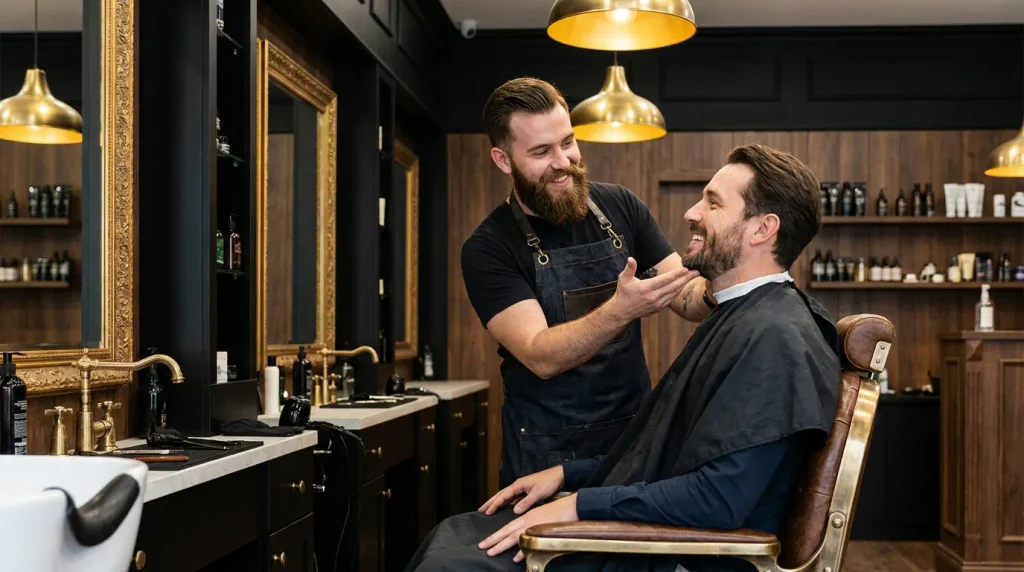
Sometimes the smartest move is to bring in an expert whether that’s for styling or for a health concern.
When a Barber Can Help Fix a Patchy Beard
A skilled barber is your best ally for a patchy beard. They can assess your growth pattern, recommend the most flattering style, define clean lines, and shape your beard to maximize coverage often transforming a patchy beard into a sharp, deliberate look in a single visit. If you’ve been fighting your beard on your own, a professional shaping session is the fastest path to results. At Z CUTZ, our barbers shape and line up beards as part of our grooming services every day.
When Sudden Beard Loss Needs Medical Advice
There’s an important distinction between a beard that’s always been patchy and one that suddenly develops bald spots. Sudden, patchy hair loss especially smooth, circular bald patches can be a sign of a condition like alopecia areata and warrants a visit to a doctor or dermatologist. If your beard loss is new, rapid, or accompanied by hair loss elsewhere, seek medical advice rather than trying to fix it cosmetically.
Common Mistakes When Fixing a Patchy Beard
Avoiding these common errors will save you time and frustration.
Trimming Your Beard Too Short
Trimming too aggressively is the number-one mistake. Short hairs expose gaps; longer hairs cover them. Resist the urge to constantly “clean up” your beard, and never trim during the early growth phase.
Giving Up on Your Beard Too Early
The “awkward phase” around weeks two to four is when most men quit right before their beard would have started to fill in. Patience is the most underused beard-growth tool. Give it a full six weeks before making any judgment.
Using Too Many Heavy Products
Piling on heavy waxes and balms can clump your beard, weigh it down, and actually make patches more visible. With a patchy beard, less is more a few drops of lightweight oil and a good brush usually beat a cabinet full of heavy products.
FAQs About How to Fix a Patchy Beard
How long does it take to fix a patchy beard?
Give any patchy beard at least four to six weeks of uninterrupted growth before judging it, as longer hairs cover gaps. Improving growth through better nutrition, skin care, and grooming can take two to three months to show results. For younger men, natural filling-in may continue over several years.
Can a patchy beard become full?
It depends on the cause. If patchiness is due to age, poor nutrition, or lack of care, a beard can become significantly fuller over time. If it’s purely genetic, you may not achieve total coverage but with the right length, shaping, and styling, almost any patchy beard can be made to look full.
Does shaving fix a patchy beard?
Shaving doesn’t change your follicles or make hair grow back thicker that’s a myth. However, shaving down to stubble or choosing a shorter style can make patchiness far less noticeable, which is often the most practical “fix” for stubborn gaps.
What is the best beard style for a patchy beard?
Short beards, stubble, goatees, and faded beards are the most flattering for patchy growth. The best choice depends on where your growth is strongest concentrate the beard where you’re densest and minimize or remove the thin areas. A barber can help you choose.
Does beard oil help fix a patchy beard?
Beard oil won’t grow new hair, but it conditions your beard and skin, reduces itch, and keeps hairs soft so they lie flatter and cover thin spots better. It’s a genuine help for making a patchy beard look fuller and healthier just not a cure for the patchiness itself.

A patchy beard isn’t a dead end it’s a starting point. Be patient through the growth phase, take care of your skin and diet, choose a style that plays to your strengths, and keep your products light. Most importantly, don’t be afraid to bring in a professional.
Ready to turn your patchy beard into a sharp, deliberate look? At Z CUTZ Barbershop, we bring skill and style together every visit, every time. With three locations across Bangkok and one standard of excellence, our barbers will shape, line up, and style your beard to look its absolute best.
Find us in Bangkok open daily, 10:00–22:00:
- Silom — Baan Silom, 651 Si Lom Rd, Bang Rak, Bangkok 10500 · ☎ +66 98-062-3658
- Sukhumvit 101/1 (Main Branch) — 101/10 Sukhumvit 101/1 Rd, Bang Chak, Phra Khanong, Bangkok 10260 · ☎ 094-026-0017
- Rangsit — 28/40 Soi Vibhavadi Rangsit 60, Talat Bang Khen, Bangkok 10210 · ☎ 061-154-9371
Book your appointment now and walk out with fresh cuts and fresh confidence.